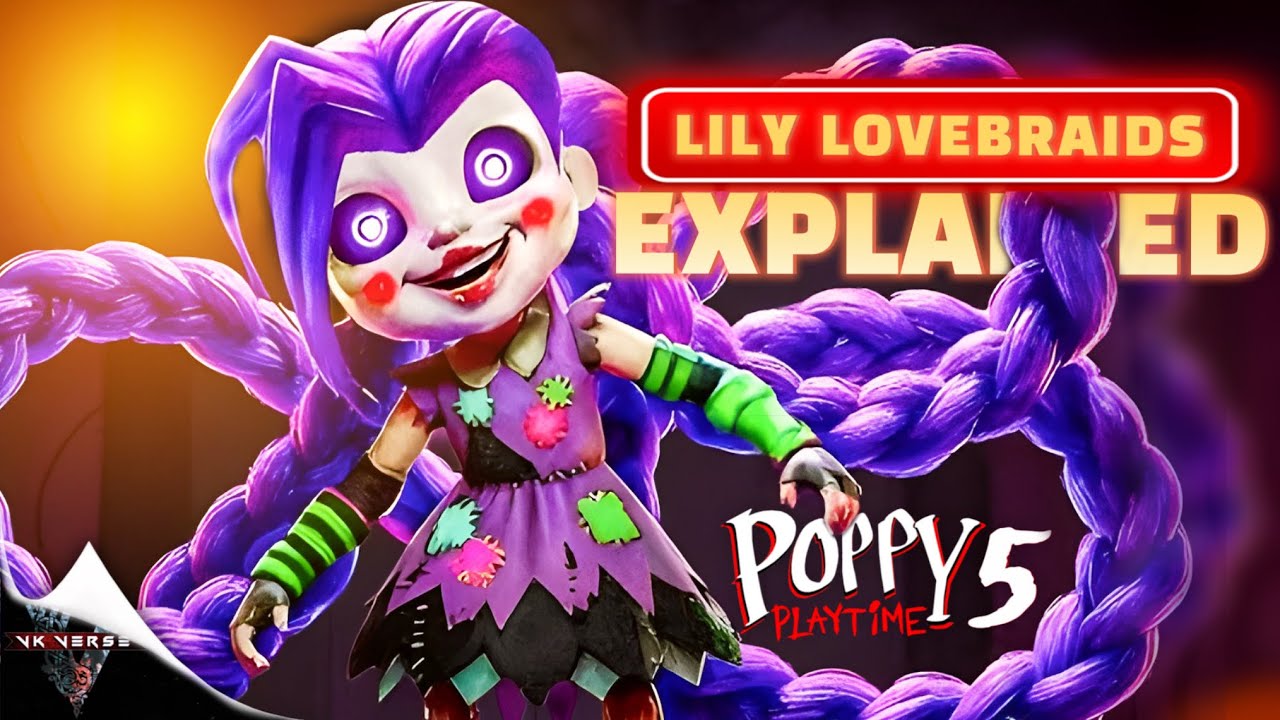
Unraveling Lily Lovebraids: An Introduction to Playtime Co.'s Enigmatic Doll
In the expansive and often unsettling world of Playtime Co., where seemingly innocent toys transform into nightmarish entities, a new character has emerged, capturing the attention and sparking considerable debate among fans: Lily Lovebraids. This secondary antagonist, introduced in Chapter 5: Broken Things, is more than just another monster; she represents a fascinating intersection of design philosophy, narrative purpose, and evolving fan expectations within the Poppy Playtime universe. From her subtle teasing in promotional art to her official reveal, Lily Lovebraids has quickly carved out a significant, if contentious, niche in the game's lore.
Understanding Lily Lovebraids requires a deep dive into her origins, her role in the unfolding horror, and the passionate discussions her appearance has ignited. Her name itself, "Lovebraids," conjures an image of warmth and care, a stark contrast to the grim realities of the abandoned factory. Yet, like all of Playtime Co.'s creations, beneath the charming exterior lies a story of corruption and terror waiting to be unearthed. As we delve into the mystery of Lily Love Braids, we'll explore not just who she is, but what she signifies for the future of the franchise.
From Tease to Terror: The Origin and Official Reveal of Lily Lovebraids
The journey of Lily Lovebraids into the spotlight was a carefully orchestrated affair, typical of the build-up surrounding major Poppy Playtime character introductions. Long before her official appearance, savvy fans had already caught glimpses of her, hinting at her impending debut. The first breadcrumbs were scattered through various promotional materials, most notably in Halloween artwork crafted by artist Amber Ogden. These early teasers were subtle, often requiring keen eyes to spot the silhouette or a distinguishing feature that would later become synonymous with Lily.
This method of gradual reveal is a hallmark of the Poppy Playtime franchise, effectively building anticipation and allowing theories to brew within the community. It creates a sense of collaborative discovery, as fans piece together clues before the official unveiling. The excitement reached a peak when Lily Lovebraids was officially revealed as a pivotal figure in Chapter 5: Broken Things. This transition from a background Easter egg to a confirmed antagonist solidifies her place in the game's expanding roster of monstrous toys, setting the stage for her terrifying role.
Her design, when finally showcased, stayed true to the essence of Playtime Co.'s original toy line: vibrant colors, distinctive features, and an initially endearing aesthetic. These initial designs are crucial, as they serve as the foundation for the grotesque transformations that are characteristic of the game's horror elements. For Lily Love Braids, her signature braided hair and presumed gentle demeanor in her original form lay the groundwork for a more sinister, corrupted iteration that players will eventually face.
Lily Lovebraids' Role in Chapter 5: A Secondary Antagonist Emerges
With her official introduction in Chapter 5: Broken Things, Lily Lovebraids steps directly into the narrative as a secondary antagonist, adding another layer of threat and complexity to the player's perilous journey through the abandoned Playtime Co. factory. In a game known for its terrifying primary antagonists like Huggy Wuggy and Mommy Long Legs, the role of a secondary foe is crucial; they often provide recurring challenges, environmental hazards, or contribute to the overall oppressive atmosphere without necessarily being the central pursuit.
As a secondary antagonist, her emergence in Chapter 5 introduces a new layer of threat, often complementing the primary antagonist's actions or presenting distinct obstacles that require unique strategies to overcome. Her presence indicates that the player will likely encounter her repeatedly, perhaps in different forms or stages of corruption, requiring both stealth and quick thinking. This role allows the game developers to diversify the gameplay mechanics, offering different types of scares and puzzles than those presented by the main threat of the chapter. For an in-depth look at her adversarial role, check out: Lily Lovebraids: Meet Chapter 5's Secondary Antagonist in Poppy Playtime.
The nature of her threat could be varied:
- Pursuit: She might actively chase the player through specific segments.
- Environmental Hazard: Her corrupted form could manipulate the environment, creating traps or blocking pathways.
- Puzzle Element: Overcoming her might involve solving specific puzzles or understanding her unique abilities.
- Psychological Intrigue: Her backstory, as an originally innocent toy, could be used to evoke empathy before her monstrous transformation, adding a layer of psychological horror.
Ultimately, Lily Lovebraids serves to heighten the tension, ensure players remain on edge, and contribute to the rich, horrifying tapestry of the Poppy Playtime narrative. Her interactions with the player are designed to be memorable, pushing the boundaries of survival horror within the game.
The Lily Lovebraids Design Debate: Fan Expectations vs. Reality
Perhaps one of the most talked-about aspects of Lily Lovebraids isn't just her role, but her design itself, which sparked an unexpectedly heated debate among the Poppy Playtime fanbase. The initial reveal of her character led to a vocal segment of the community expressing disappointment, articulated by comments such as, "Lily Lovebraids design sucks," followed by satirical remarks from other fans highlighting an extreme level of gore some players had come to expect, referencing "large intestines pouring out of its stomach and baby heads as feet."
This reaction is fascinating, revealing much about the evolving expectations of the Poppy Playtime audience. Prior antagonists like Huggy Wuggy, Mommy Long Legs, and CatNap have all featured highly grotesque, body-horror-infused designs in their corrupted forms. Huggy's multiple rows of teeth, Mommy's unnaturally elastic limbs, and CatNap's emaciated, skeletal appearance have set a precedent for visceral horror. Consequently, when a new antagonist like Lily Love Braids appears, some fans might have anticipated an immediate and explicit display of extreme disfigurement or gore, even in her original toy form, or certainly upon her transformation.
The "design sucks" argument often stems from a perceived lack of immediate shock value or a departure from the established aesthetic of overt horror. This divergence between anticipation and actuality sparked a lively debate among the community, explored further in: Poppy Playtime Fans React: Is Lily Lovebraids' Design Too Tame? However, it's crucial to consider several counterpoints and potential design philosophies:
- Thematic Contrast: Playtime Co. toys were originally for children. Lily's design, even as an antagonist, might intentionally retain elements of her innocent toy origins to create a stronger, more disturbing contrast when she inevitably becomes corrupted. The horror can be more impactful if it subverts an initially harmless appearance.
- Building Suspense: A less overtly grotesque initial design can build suspense. The true terror isn't just in her appearance, but in what she does, or what she becomes. The slow reveal of her monstrous capabilities or true form can be far more unsettling than an immediate jump scare.
- Diversifying Horror: Not all horror needs to be body horror. Poppy Playtime can and does employ psychological horror, environmental storytelling, and the dread of the unknown. Lily's design might lean into these elements more, offering a different flavor of fear.
- Narrative Significance: Her design might hold specific lore implications. Perhaps her original role at Playtime Co. or her unique transformation process explains her particular aesthetic.
Ultimately, the debate around Lily Lovebraids's design highlights the challenge game developers face in balancing fan expectations with creative vision. While some crave immediate visual shock, others might appreciate a more nuanced approach to horror that allows for deeper thematic exploration and varied scares.
The Deeper Meaning Behind Lily Lovebraids and Her Future
Beyond the debates and her immediate role as an antagonist, Lily Lovebraids holds potential for deeper significance within the intricate lore of Poppy Playtime. Each corrupted toy in Playtime Co. tells a story, often reflecting the company's sinister experiments and the tragic fates of those involved. Lily is unlikely to be an exception. Her name, "Lovebraids," suggests a doll perhaps designed for affection or companionship, making her transformation into a secondary antagonist all the more poignant and terrifying.
Her design, if indeed less overtly horrifying in her original form, could be a deliberate choice to emphasize the tragedy of the situation: that even the most innocent creations were subjected to the horrifying fate of the "Bigger Bodies Initiative." This could tie into themes of lost innocence, corporate greed, and the perversion of childhood joy, core tenets of the Poppy Playtime narrative.
Looking ahead, Lily Lovebraids could serve several purposes:
- Expanding the Lore: Her backstory might reveal more about the experimental processes, specific scientists, or areas within Playtime Co. that haven't been fully explored.
- Player Challenges: She might introduce unique gameplay mechanics or environmental puzzles that reflect her specific abilities or original toy functions.
- A Glimpse into the Past: Through documents or flashbacks associated with her, players might gain further insight into the lives of the employees or children within the factory before its downfall.
As the narrative progresses and the mysteries of Playtime Co. unravel, Lily Lovebraids is poised to be more than just another scary toy. She represents another piece of a larger, tragic puzzle, contributing to the game's rich atmosphere and expanding its terrifying universe. Her introduction in Chapter 5 is just the beginning of understanding her full impact on the player and the overarching story.
Conclusion
Lily Lovebraids stands as a compelling new addition to the terrifying world of Poppy Playtime. From her subtle teasing to her official reveal as a secondary antagonist in Chapter 5: Broken Things, she has already left a significant mark. The passionate debate surrounding her design, contrasting fan expectations for extreme gore with her more nuanced aesthetic, underscores the evolving relationship between the game and its dedicated community. Whether her design is seen as "too tame" or a stroke of thematic genius, it undeniably adds another layer of complexity to Playtime Co.'s roster of corrupted toys. As players venture deeper into the horrors of the abandoned factory, Lily Love Braids will undoubtedly prove to be a memorable and crucial part of the unfolding narrative, embodying the chilling essence of innocent play twisted into pure terror.